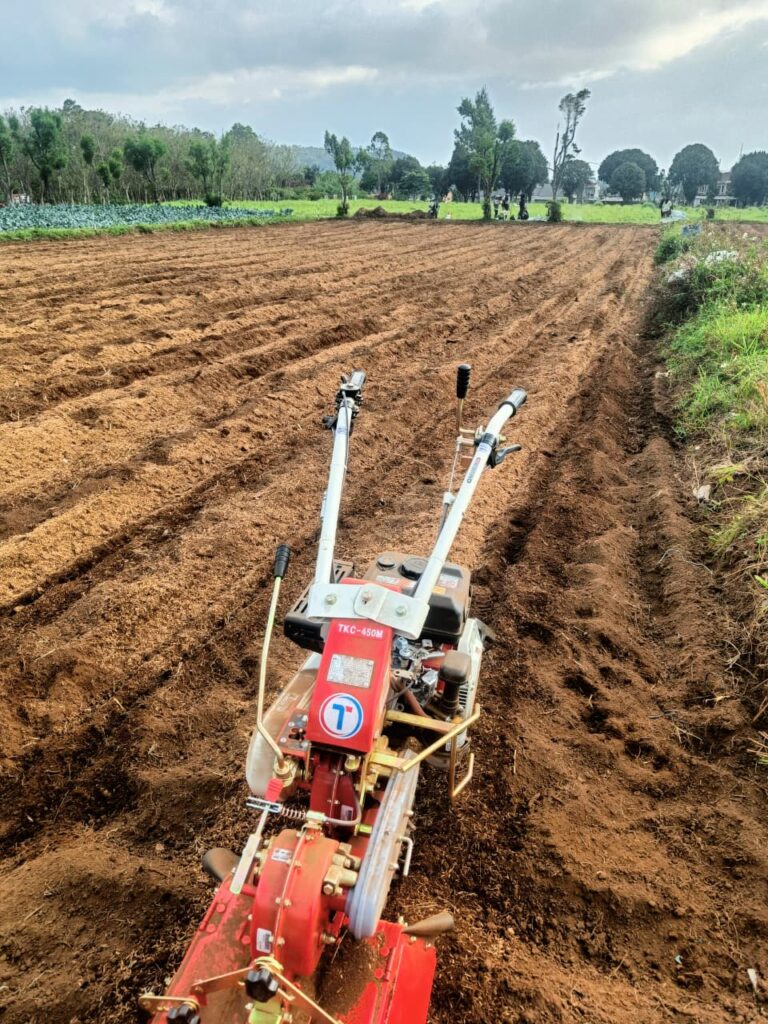

The field performance testing and yield evaluation of the TKC 450 mini cultivator is a standardized assessment designed to evaluate the tool’s operational capabilities in potato cultivation, particularly for furrowing and inter-row weeding. The testing compares mechanized cultivation using the mini cultivator with conventional manual methods carried out with traditional tools on sandy-loam soils. The scope of evaluation includes operational performance, soil-working characteristics, weeding efficiency, operator safety and comfort, as well as agronomic responses of the crop.
This test aims to provide a comprehensive understanding of the effectiveness of mechanization using the TKC 450 mini cultivator in improving work capacity, field efficiency, and labor savings compared with manual practices. Additionally, the study seeks to determine the impacts of mechanization on crop growth, weed control, and potential productivity improvements. The findings are intended to serve as a basis for recommending mechanized cultivation practices for smallholder potato farming systems, thereby supporting farm efficiency and the adoption of appropriate technology.
The testing follows a structured sequence consisting of land preparation, planting, weed management, and performance measurement. The field is prepared using a rotary tiller, followed by lime application and manure fertilization according to crop requirements. Planting is conducted in furrows spaced 80 cm apart, with in-row spacing of 20–30 cm. The mini cultivator is used for furrowing and biweekly inter-row weeding until two months after planting, while the manual treatment relies on traditional hand tools. Measurements include working width and depth, furrow dimensions, operating speed, field capacity and efficiency, fuel consumption, and labor requirements. Additional agronomic evaluations such as emergence rate, plant height, and weed biomass are conducted alongside operator safety and comfort assessments. All collected data are statistically analyzed using ANOVA, followed by mean separation with the 5% LSD test.